Quotes: 8 May 2026
A lot of intriguing thoughts here!

In the Enlightenment, although the process of alienation of the observing subject was well under way, there was as yet little doubt that there existed a world for it to observe. Its construction of the world as clear, orderly, fixed, certain and knowable, was inevitably a simulacrum substituted for the ever-changing and evolving, never graspable actuality of experience, but it was nonetheless taken for a reality – as though the frescoes on the wall of an eighteenth-century dining room were taken for the world outside.
Judging people by their beliefs is not scientific. There is no such thing as the “rationality” of a belief, there is rationality of action. The rationality of an action can be judged only in terms of evolutionary considerations.
In 1929, Mumford had emphasized how important it was that “Melville was a realist, in the sense that the great religious teachers are realists.”
‘Tell me what you want,’ said Anton Chekhov, ‘and I will tell you what manner of man you are.’
Again the mistake; for character is not what you do, it’s the way you do it.
Language enables us to distinguish truth and falsehood; past, present, and future; possible, actual, and necessary, and so on. It is fair to say that we live in another world from nonlinguistic creatures. They live immersed in nature; we stand forever at its edge.
Or as I say, we are both a part of Nature & apart from Nature.
The mythical approach to our subject, power, means that moralizing about it falls away. This is because the background figures of power—heroes, kings, giants, ogres, queens, witches, wise women, crones, spirits, daimones and especially Gods and Goddesses show that there are no absolute good or absolute evil figures. Any God or Goddess can be an enemy and a killer. Any form of power can be destructive or constructively valuable. There are abuses of magnanimity and nurture as there are instances of constructive well-being under the harsh rule of tyranny. Yes, there are even benign despots. A benign despot is not an oxymoron: Western history is filled with constructive monsters like the czar who built St. Petersburg, or Napoleon.
. . . .
Good service can hardly be defined by delivery of product without the consuming population being thrown into an Orwellian nightmare of forced consumption trying to satisfy the increase of invented needs. (“You can never get enough of what you don’t really want,” said Eric Hoffer.)

The rapid shift from a rural-centric population to an urban one is, per Karl Marx’s theory of workers’ revolutions, politically risky. Wealth can grow fantastically unequal—another political danger. It can be perilous to quickly open up your economy and culture to globalization’s many liberating influences, fierce competition, and migrations. Such integration is revolutionary across the board, but especially in how it empowers women relative to men in traditional societies—a dynamic that fuels a lot of terrorism by fundamentalists unwilling to turn their cultural “clocks” ahead.
Doubters would no longer be friendly doubters, they would be critics and soon enemies; and worse, soon after that, traitors. There was no way to reach him [LBJ], to enter his chamber, to gain his ear, other than to pledge total loyalty. Only one man would be able to change him, to dissent and retain his respect—and even that was a tenuous balancing act which virtually destroyed one of his oldest friendships, and that was Clark Clifford in 1968.
If only Trump had but one Clark Clifford!
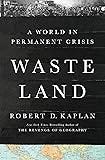
Solzhenitsyn demonstrates—rather than merely states—the need for order above all else. Order in pre-revolutionary Russia constituted a medieval totality, represented by the absolutism of the Romanov dynasty. Czar Nicholas II was stupid, indecisive, and self-destructive. He had no judgment. But as much as Nicholas retreated into a reactionary past—even as Russian society was experiencing the painful birth pangs of modernization—there could simply be no Russia without the monarchy.

That latter-day Collingwoodian, Alasdair MacIntyre, everywhere present in these pages, proposed a difference between “that well-established genre, the biography of philosophers, and that yet-to-be-established genre, the history of philosophers.” This book, unmistakably a biography, is nonetheless an effort to blend the two, and turn biography into history, thereby confounding our great original’s polemic.
Collingwood deplored biography as a genre. But then he never read Robert Caro (or many other fine works of historical biography that we now have).