Quotes: 4 August 2026
All about political thinking

[O]ne of Rousseau’s most important conclusions: inequality results from people’s efforts to be thought of and treated as superior. Whatever the supporting role of factors such as population growth, intensive agriculture, and beneficent environment, hereditary inequality does not occur without active manipulation of social logic by human agents.
Compare this with the Scruton quote below.
The birth of the social sciences can be located at the moment when all things, “ideas” as well as material objects, were equated with values, so that everything derived its existence from and was related to society, the bonum and malum no less than tangible objects. In the dispute as to whether capital or labor is the source of values, it is generally overlooked that at no time prior to the incipient Industrial Revolution was it held that values, and not things, are the result of man’s productive capacity, or was everything that exists related to society and not to man “seen in his isolation.” The notion of “socialized men,” whose emergence Marx projected into the future classless society, is in fact the underlying assumption of classical as well as Marxian economy.
What knowledge can the social sciences offer to help policy-makers do their job? Can they—especially economics and political science—help us design better institutions for this dauntingly complex new world? At the APSA meeting, I knew I would have the chance to observe state-of-the-art political science. . . . .
Adapted from an 1816 letter to Samuel Kercheval and carved into the southeast wall [of the Jefferson Memorial], it reads:
I am not an advocate for frequent changes in laws and constitutions. But laws and institutions must go hand in hand with the progress of the human mind. As that becomes more developed, more enlightened, as new discoveries are made, new truths discovered and manners and opinions change, with the change of circumstances, institutions must advance also to keep pace with the times.
Jefferson had understood that institutions must change with changing circumstances. Today, his statement seems more pertinent than ever.
Amen.

[Collingwood’s] best-known aphorism “all history is the history of thought,” which he took to mean that political theory is not an interminable anecdote summarising a sequence of remarks on politics made by consecutive theorists—by seven league boots from Plato to Nato, as the old joke has it—but is “the thought which occupies the mind of a man engaged in political work: the formation of a policy, the planning of means to execute it, the attempt to carry it into effect, the discovery that others are hostile to it, the devising of ways to overcome their hostility, and so forth.” [Colliingwood’s Autobiography, p. 110.]
Keep this in mind when reading the following quote from Waltz.
R. G. Collingwood once suggested that the best way to understand the writings of philosophers is to seek out the questions they were attempting to answer. It is here suggested that the best way to examine the problems of international political theory is to pose a central question and identify the answers that can be given to it.
Collingwood was not just suggesting this analysis for philosophers, but for all human thought, including actions.
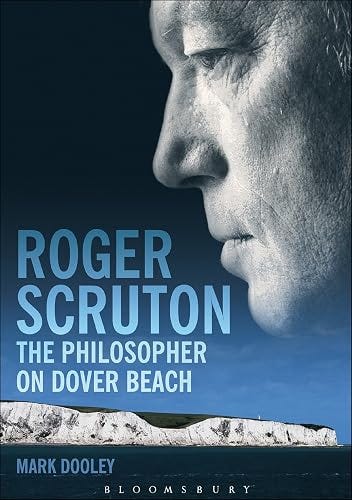
[F]ollowing Hayek, Scruton denounces the very idea of ‘social justice’, saying that in its name ‘any amount of injustice can be inflicted’. Why so? Because those who subscribe to that idea refuse to countenance the fact, as Xanthippe [a character in a Scruton dialogue] puts it, that ‘the justice of a state lies in its procedures alone’. In her view, a state is just to the extent ‘that justice is done in it; and justice is done when impartial judges give judgment according to natural law’, no more, no less. It is simply not the job of the legislator or the judge to use the law as an instrument for social engineering.
I dissent. “Natural law?” Only? While impartiality, fairness, and adherence to the law are crucial for a judicial system, ideas of justice need to expand beyond the courts into legislation, which, like it or not, must take notions of justice into account.
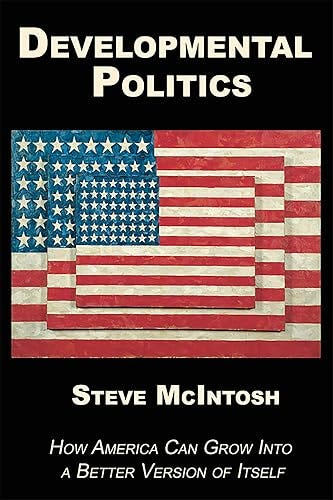
Moral systems are the product of collective agreements enforced through social norms, peer pressure, and the expectations of the larger community. And the effectiveness of these cultural agreements depends on a communitarian ethos—a binding sense of solidarity that emphasizes the sacrifice of the self for the sake of the larger group.
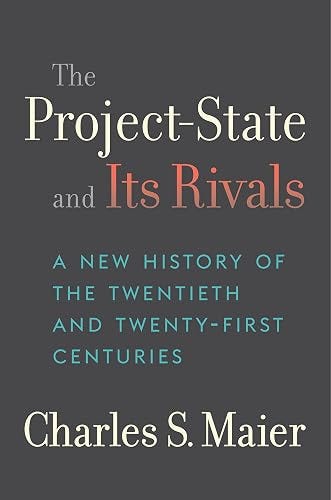
The Project-State and Its Rivals
[T]wo major themes occupy this history. The first is the rise and eclipse—final or not no one can say; this history must remain unresolved—of what I term the activist project-state. The project-state was a political unit that consciously aspired to inflect the course of history. If large enough, it wanted to play a leading and perhaps hegemonic role in international society. No matter what its size and power, it aspired to change social and economic relations in a profound way and not just to prolong administrative continuity. Project-states had a transformative agenda; they were based on authoritarian and even totalitarian as well as liberal and democratic coalitions seeking to reform sclerotic institutions or societies that seemed unacceptably unequal.
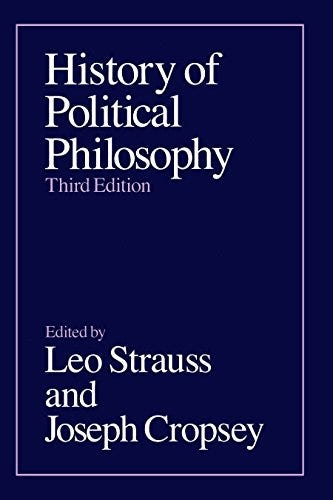
History of Political Philosophy
Leo Strauss (Editor), Joseph Cropsey (Editor)
The true crisis was, rather, that the West, under the influence of its highest intellectual authorities, no longer believed in itself, in its purpose, in its superiority. For Strauss understood the modern West to be constituted by a specific purpose or project: the construction of a universal society of free and equal nations of free and equal men and women enjoying universal affluence, and therefore universal justice and happiness, through science understood as the conquest of nature in the service of human power. [EPILOGUE “Leo Strauss and the History of Political Philosophy” by Nathan Tarcov and Thomas Pangle.]
In liberal form, economic democracy protects everyone from wealth. It also offers protection for wealth from state and society. Since 1945, democratic liberalism has presumed economic democracy, though the strength of the latter (more market? more society?) is fought over. (See “hyper-liberalism.”)
The problem today is the protecting “everyone from wealth.” Wealth is a primary (and probably the primary) determinent of power in our society. With the brologarchs and other plutocrats we have today, the problem is excessive power in the hands of a few, who can buy influence. The wealthy always fear the poorer among them, but there’s not immediate threat of that today in the U.S.