Quotes: 27 June 202
On language & meaning


How to understand language? This is a preoccupation going back to the very beginning of our intellectual tradition. What is the relation of language to other signs? To signs in general? Are linguistic signs arbitrary or motivated? What is it that signs and words have when they have meaning? These are very old questions. Language is an old topic in Western philosophy, but its importance has grown. It is not a major issue among the ancients. It begins to take on greater importance in the seventeenth century, with Hobbes and Locke. And then in the twentieth century it becomes close to obsessional. All major philosophers have their theories of language: Heidegger, Wittgenstein, Davidson, Derrida, and all manner of “deconstructionists” have made language central to their philosophical reflection.
. . . .
Then we can rephrase the constitutive view by saying that language introduces new meanings in our world: the things which surround us become potential bearers of properties; they can have new emotional significance for us, for example as objects of admiration or indignation; our links with others can count for us in new ways, as lovers, spouses, or fellow citizens; and they can have strong value.
Clare Mac Cumhaill and Rachael Wiseman
Elizabeth [Anscombe’s] patient explanation in which she compared Wittgenstein’s interest in human life to Aristotle’s: ‘The special importance of language does not, then, flow from its being a particularly grand isolated phenomenon. It arises because speech is a central human activity, reflecting our whole nature – because language is rooted, in a way that mathematics is not, in the wider structure of our lives.’ This is why studying language is ‘an investigation of our whole nature’.

George Orwell: Politics and the English Language
What is above all needed is to let the meaning choose the word, and not the other way around. In prose, the worst thing one can do with words is surrender to them. When you think of a concrete object, you think wordlessly, and then, if you want to describe the thing you have been visualising you probably hunt about until you find the exact words that seem to fit it. When you think of something abstract you are more inclined to use words from the start, and unless you make a conscious effort to prevent it, the existing dialect will come rushing in and do the job for you, at the expense of blurring or even changing your meaning. Probably it is better to put off using words as long as possible and get one’s meaning as clear as one can through pictures and sensations.
A question that has perplexed me for years is what is meant by story and how it differs from plot. Is the issue no more than semantics, or is it at the heart of the way novelists set about their business?
Meaning, Truth, and Reference in Historical Representation
[T]his book can be seen as an invitation to philosophers of language to explore new territory—namely, that of the historical text. But one further observation is relevant here. One cannot fail to be struck by the fact that the claim defended here, that descriptions do not represent, is far simpler, more straightforward, and more self-evident than the antirepresentationalism of Quine et al.
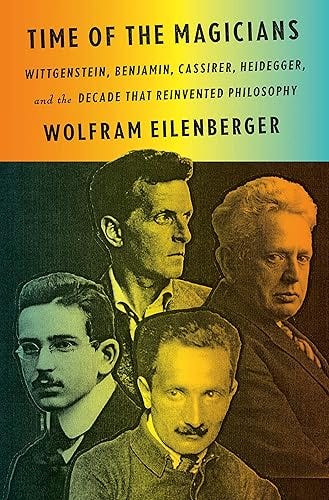
Indeed, none other than Wittgenstein’s publisher, the man of letters, linguist, and philosopher C. K. Ogden, in March 1923 had released a book titled The Meaning of Meaning, which sought to capture core insights of Wittgenstein’s thought by explaining the foundations of meaning through language. Ogden proudly sent a copy to Puchberg—only to receive the following reply from Wittgenstein: I have now read your book and wish to admit quite openly that in my view you have not correctly grasped the actual problems on which—for example—I have been working (regardless of whether my solution of them is correct or not). Ogden’s suggestion (which is still popular among philosophers of language) that the riddle of linguistic meaning be solved via the category of causality and a conscious reference by the speaker to the denoted object is, in Wittgenstein’s view, too wrongheaded to seriously consider a potential answer. Hadn’t he clearly shown that the actual sense-founding relationship between logical sentence structure and the logical construction of the world itself had nothing meaningful to say or even to explore, but that they were simply as given and hence at best to be marveled at?
Without the shared meaning that gives it life, a language becomes dead. While the word symbols of a dead language may persist in the archeological record, once the shared meanings of the words are lost, the cultural system they once represented ceases to exist.
To speak of a writer’s motives seems invariably to speak of a condition antecedent to, and contingently connected with, the appearance of their works. But to speak of a writer’s intentions may either be to refer to a plan or design to create a certain type of work (an intention to do x) or else to refer to an actual work in a certain way (as embodying a particular intention in x-ing). In the former case we seem (as in talking about motives) to be alluding to a contingent antecedent condition of the appearance of the work. But in the latter we seem to be alluding to a feature of the work itself. Specifically, we seem to be characterising it in terms of its embodiment of a particular aim or intention, and thus in terms of its having a particular purpose or point.
We can conveniently corroborate this claim by borrowing the jargon invented by philosophers of language to discuss the logical relations between the concepts of intention and meaning. They have concentrated on the fact (following J. L. Austin’s classic analysis) that to issue any serious utterance is always to speak not only with a certain meaning but also with what Austin dubbed a certain illocutionary force. When we issue a meaningful utterance, we may succeed at the same time in performing such illocutionary acts as promising, warning, entreating, informing and so on. Austin’s usual way of putting the point was to say that gaining ‘uptake’ of the illocutionary force of an utterance will be equivalent to understanding what the speaker was doing in issuing it.
The very idea of original meaning has more than one meaning.