Quotes: 24 March 2026

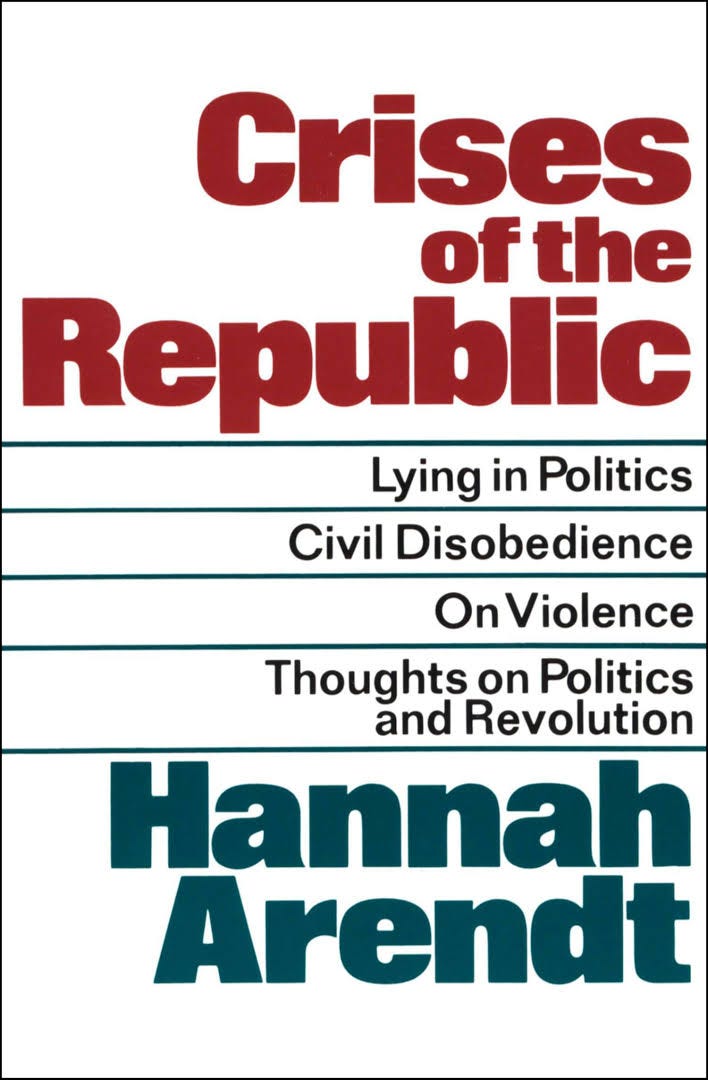
[T]he presence of what [Daniel] Ellsberg has called the process of “internal self-deception” is beyond doubt, but it is as though the normal process of self-deceiving were reversed; it was not as though deception ended with self-deception. The deceivers started with self-deception. Probably because of their high station and their astounding self-assurance, they were so convinced of overwhelming success, not on the battlefield, but in the public-relations arena, and so certain of the soundness of their psychological premises about the unlimited possibilities in manipulating people, that they anticipated general belief and victory in the battle for people’s minds. And since they lived in a defactualized world anyway, they did not find it difficult to pay no more attention to the fact that their audience refused to be convinced than to other facts.
The internal world of government, with its bureaucracy on one hand, its social life on the other, made self-deception relatively easy. No ivory tower of the scholars has ever better prepared the mind for ignoring the facts of life than did the various think tanks for the problem-solvers and the reputation of the White House for the President’s advisers. It was in this atmosphere, where defeat was less feared than admitting defeat, that the misleading statements about the disasters of the Tet offensive and the Cambodian invasion were concocted. But what is even more important is that the truth about such decisive matters could be successfully covered up in these internal circles—but nowhere else—by worries about how to avoid becoming “the first American President to lose a war” and by the always present preoccupations with the next election.
So far as problem-solving, in contrast to public-relations managing, is concerned, self-deception, even “internal self-deception,” is no satisfactory answer to the question “How could they?” Self-deception still presupposes a distinction between truth and falsehood, between fact and fantasy, and therefore a conflict between the real world and the self-deceived deceiver that disappears in an entirely defactualized world; Washington and its sprawling governmental bureaucracy, as well as the various think tanks in the country, provide the problem-solvers with a natural habitat for mind and body. In the realm of politics, where secrecy and deliberate deception have always played a significant role, self-deception is the danger par excellence; the self-deceived deceiver loses all contact with not only his audience, but also the real world, which still will catch up with him, because he can remove his mind from it but not his body. The problem-solvers who knew all the facts regularly presented to them in the reports of the intelligence community had only to rely on their shared techniques, that is, on the various ways of translating qualities and contents into quantities and numbers with which to calculate outcomes—which then, unaccountably, never came true—in order to eliminate, day in, and day out, what they knew to be real. The reason this could work for so many years is precisely that “the goals pursued by the United States government were almost exclusively psychological,” that is, matters of the mind.
Again, here's a lengthy quote from this work, but I believe it’s fascinating to compare what we read about Arendt's claims regarding the social and psychological mechanisms of self-deception among the “best and brightest” in American administration during the Vietnam War with what the Trump administration is saying and doing about our war on Iran. Are members of the Trump administration self-deceived? Or are they trying to bamboozle the public with their statements? Or both? I’m not sure, but I will say that Trump and his team are often astonishingly open about their motives, hypocrisy, and disregard for standards of conduct, whether moral or legal. Maybe they simply don’t care about any norms or laws, and they just do what they—especially Trump—want. Government by whim in addition to ideology.

Essays in Understanding, 1930-1954
If the essence of all, and in particular of political, action is to make a new beginning, then understanding becomes the other side of action, namely, that form of cognition, distinct from many others, by which acting men (and not men who are engaged in contemplating some progressive or doomed course of history) eventually can come to terms with what irrevocably happened and be reconciled with what unavoidably exists.

We Are Free to Change the World
Arendt took a very different path from Hamlet’s tragically self-destructive vengeance. It was because the world was out of joint that things could be different, that things might, indeed they must, begin again, she insisted instead.

In the classic TV science fiction series Star Trek¸ the United Federation of Planets strictly adheres to a single rule when encountering “new life and new civilizations”: the Prime Directive. This directive prohibits members from meddling in the natural development of alien worlds, thus allowing them to grow into candidate status based on their own choices. Since launching our model of globalization, America has struggled with that meddling instinct, consistently lapsing into fear-threat mode whenever our protégés insufficiently Americanize themselves. In our strategic impatience, we are too much Captain Kirk and not enough Mr. Spock.

My HHH [Hamann-Herder-Humbolt]-inspired critique is not in any sense aimed at dismissing or downgrading this agenda. Quite the contrary. But what I will try to show can be summed up in two basic points: First, that the functions of description and information-encoding, whose underpinnings this agenda tries to explore, are very far from exhausting the functions, uses, and potentialities of language. This will go hand in hand with attempts to show the features of linguistic awareness which defy the reductivist-continuity interpretation. These two endeavors amount to two facets of the same intellectual project, just as the reductivism and descriptivism they criticize constitute two facets of the inadequate view of human language and life which has exercised underserved power in our culture.
. . . .
Then we can rephrase the constitutive view by saying that language introduces new meanings in our world: the things which surround us become potential bearers of properties; they can have new emotional significance for us, for example as objects of admiration or indignation; our links with others can count for us in new ways, as lovers, spouses, or fellow citizens; and they can have strong value.

Sinclair Lewis, the daddy of debunkers, celebrated homespun horse sense in his novel of the mid-thirties, It Can’t Happen Here, in which a country editor deflates an aspiring dictator.

Its purpose is to help us understand, rather than manipulate the world: to see the whole and how we relate to it. It is more exploratory, less certain: it is more interested in making discriminations, in shades of meaning. Since it is serving the survival instinct and the social animal in us, it has to be if it is to succeed. All relationships in this hemisphere’s world reverberate, changing both parties, and there is no simple linear cause and effect. Its attention, one might say, is not so much linear as in the round.
. . . .
Everything about human music suggests that its nature is sharing, non-competitive.

The concept of collective solidarity, or asabiya in Arabic, was Ibn Khaldun’s most important contribution to our understanding of human history.

Biology sees us as objects rather than subjects, and its descriptions of our responses are not descriptions of what we feel. The study of our kind is the business of the Geisteswissenschaften, which are not sciences at all, but ‘humanities’ – in other words, exercises in inter-personal understanding. I have in mind the kind of understanding exhibited when we explain why King Lear is a tragic figure, why ‘smiling through tears’ is an apt description of the Cavatina in Beethoven’s B-flat quartet, why Rembrandt’s self-portraits show death and decay as a personal possession, and all the other matters that form a true éducation sentimentale.

Yet insofar as every behavior and practice by individual members of Homo sapiens is by definition equally the product of biological evolution—competing with ferocity and cooperating with kindness, practicing monogamous sexual fidelity and having intercourse with many sexual partners, perpetrating genocide and campaigning to stop it, dedicating one’s life to the poor and ignoring them completely—it is unclear what normative force or applicability to morality evolutionary theory could have. Far from “explaining” all human behavior, evolutionary theory is analytically impotent in accounting for its variety and antitheses. It implies nothing about what one should believe or how one should live or the values one ought to adopt. And that all human beings are the products of biological evolution tells us nothing about why individual human beings behave as they do. Evolutionarily, there was no difference between Adolf Hitler and Dietrich Bonhoeffer during World War II, or between Idi Amin of Uganda and Mother Teresa of Calcutta in the late twentieth century. So too, “survival” or “perpetuation of genes” is not an adequate, actual answer given by human beings to the question “What should I live for?” One is alive, one is surviving—has one thereby answered any of the Life Questions? Obviously survival (though not perpetuation of genes) is a minimal precondition for any substantive answers one might give. But what comes next, and why? Most neoclassical economists and some political scientists make universalistic claims about all human beings as self-interested agents who employ instrumental rationality in order to maximize their material wellbeing. But historical research and cultural anthropological findings no less than contemporary counterexamples demonstrate that such claims are mistaken.