Quotes: 24 June 2026
Thinking about politics, society, & the limits of rationality

What has caused such rancor [regarding recent U.S. politics]? The stresses of a globalizing, postindustrial economy. Growing economic inequality. The hyperbolizing force of social media. Geographic sorting. The demagogic provocations of the president himself. As in Murder on the Orient Express, every suspect has had a hand in the crime. But the biggest driver might be demographic change. The United States is undergoing a transition perhaps no rich and stable democracy has ever experienced: Its historically dominant group is on its way to becoming a political minority—and its minority groups are asserting their co-equal rights and interests.
America is beginning to display destructive political dynamics much more typical of developing and non-Western countries: ethnonationalist movements; backlash by elites against the masses; popular backlash against both “the establishment” and “outsider minorities” viewed as disproportionately powerful; and, above all, the transformation of democracy into an engine of zero-sum political tribalism.
Compared to [Adam] Smith’s incisive analysis of the social implications of desire, vaporous tributes to the power of reason and to the progress of the arts and sciences, speculations about a perfect state of society in the future, and the various schemes of historical stages that traced social development from the simple to the complex contributed very little to a plausible theory of progress.
The Revolt of the Elites and the Betrayal of Democracy
The tradition articulated by these men was “summed up” in [Frederick Jackson] Turner’s observation about “social mobility,” which [James Bryant] Conant quoted approvingly as the “heart of my argument.” A “high degree of social mobility,” he asserted, was the “essence of a classless society.” Democracy did not require a “uniform distribution of the world’s goods,” a “radical equalization of wealth.” What it required was a “continuous process by which power and privilege may be automatically redistributed at the end of each generation.”
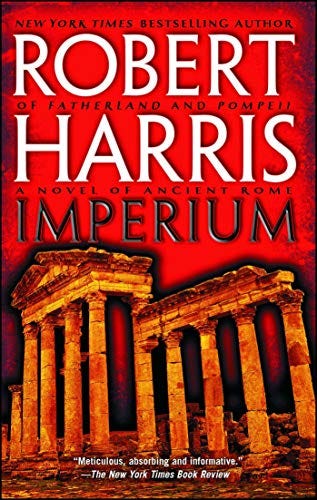
And it is of power and the man that I shall sing. By power I mean official, political power—what we know in Latin as imperium—the power of life and death, as vested by the state in an individual. [The narrator of the novel, Cicero’s aide and friend, who took Cicero’s dictation & recorded his speeches.]

The birth of the social sciences can be located at the moment when all things, “ideas” as well as material objects, were equated with values, so that everything derived its existence from and was related to society, the bonum and malum no less than tangible objects. In the dispute as to whether capital or labor is the source of values, it is generally overlooked that at no time prior to the incipient Industrial Revolution was it held that values, and not things, are the result of man’s productive capacity, or was everything that exists related to society and not to man “seen in his isolation.” The notion of “socialized men,” whose emergence Marx projected into the future classless society, is in fact the underlying assumption of classical as well as Marxian economy.
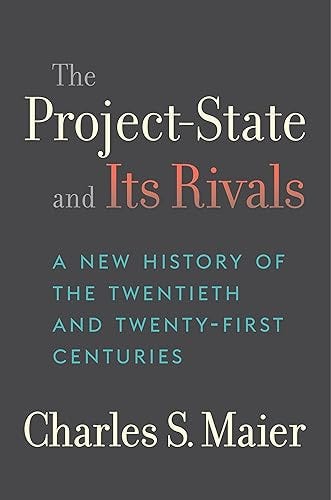
The Project-State and Its Rivals
Despite many historians’ treatment of capitalism as an all-encompassing causal framework, my own view is that the political system, based on the resources of power, whether accumulated by force or consent, remains conceptually independent.
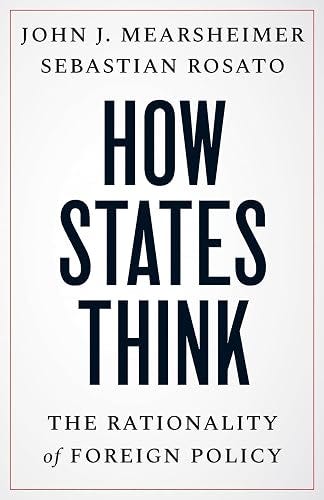
John J. Mearsheimer and Sebastian Rosato
These claims rest on common understandings of rationality that are intuitively plausible but ultimately flawed. Contrary to what many people think, we cannot equate rationality with success and nonrationality with failure. Rationality is not about outcomes. Rational actors often fail to achieve their goals, not because of foolish thinking but because of factors they can neither anticipate nor control.

When the rational-choice model fails, it is either because of indeterminacy—the model does not tell the agent what to do—or because of irrationality—the agent does not do what the model tells her to do.
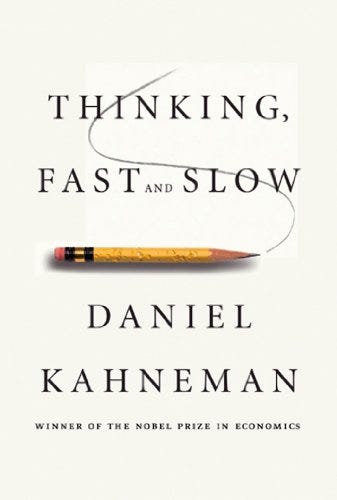
Mood evidently affects the operation of System 1: when we are uncomfortable and unhappy, we lose touch with our intuition.
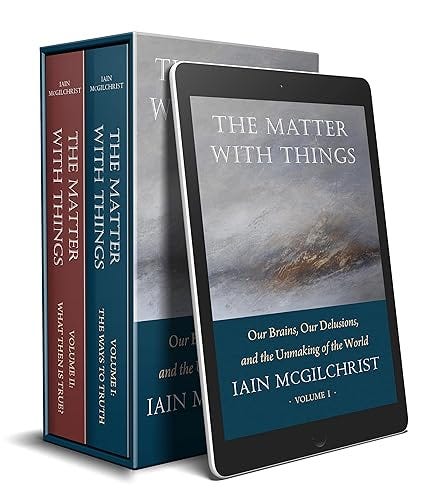
As Peter Struck’s comments on the Delphian Pythia suggest, it seems that we make our best judgments about risk outside the petrifying stare of consciousness. Unconscious influences lead us to the right answer, and in their absence conscious strategies do not suffice – indeed, they can impede. We often revise better decisions taken more intuitively and replace them with worse decisions after thinking them through more explicitly....