Quotes: 17 July 2026
Insights about American history from outstanding American historians

The rhetoric of republicanism may have served oratory and legitimating purposes, but documenting its existence does not preclude the historian from explaining conduct by trying to establish the motive for it. More than any American historian, Charles Beard wrestled endlessly with the problems of causation and motivation before settling down to investigate a particular problem of the past, Beard advised, the historian should consider “a closely related philosophical question which has accompanied speculation since the days of the Greeks, namely, which is older, fact or idea. “In the beginning was the deed we are informed by the poet Goethe,” or in the beginning was the word, we are told by the theologian. The great debate was never been close to the satisfaction of the contestants, but William James has given a fair working formula for the Declaration that “words of fact and idea evolve together, their relations are reciprocal” and “the sword of Reason has yet to be found with an edge fine enough to separate them.”
. . . .
[T]he American Revolution might better be interpreted not so much as the culmination of classical republicanism or Scottish philosophy as the beginning of liberalism, which [Walter] Lippmann defines as the overthrow of authority and the search for its substitute.
. . . .
Rather than being a "paradox" of American history, the spirit of liberty and the spectacle of slavery grew out of the same psyche, what Melville and Lincoln would call the "sin” of pride, the thorn in the soul of the American body politic.
. . . .
Free of the calculations of science and the misperceived dictates of nature, the Calvinist idea of virtue allowed emancipation to be perceived as a moral imperative that demanded man’s will to consent to God’s love. The darker side of Calvinism, the sense of guilt and damnation, also led Lincoln to see slavery as a “sin” and the Civil War as something of a blood-sacrifice, punishment, foreshadowing atonement. Jefferson is usually praised as the "apostle" of American liberty, but it was actually Lincoln, whose reasoning about liberty, equality, and morality was far more penetrating and hence more liberating, who provided American liberalism with its finest moment.
The Creation of the American Republic, 1776-1787
When the American Whigs described the English nation and government as eaten away by “corruption,” they were in fact using a technical term of political science, rooted in the writings of classical antiquity, made famous by Machiavelli, developed by the classical republicans of seventeenth-century England, and carried into the eighteenth century by nearly everyone who laid claim to knowing anything about politics.81 And for England it was a pervasive corruption, not only dissolving the original political principles by which the constitution was balanced, but, more alarming, sapping the very spirit of the people by which the constitution was ultimately sustained.
. . . .
Classical republicanism was certainly not the besieged ideology of a few revolutionary intellectuals. It was not a body of thought exclusively identified with radical Whigs or Bolingbrokean Tories, with the extreme left or right, or with any fringe groups whatsoever in British and American politics. Republican values were not marginal; they spread everywhere in the culture of the Western world, not just among the English-speaking peoples but on the continent as well. For most educated elites in the eighteenth century, monarchism and republicanism often blended and blurred to the point where the two at times seemed virtually indistinguishable.
Henry Adams and the Making of America
Jefferson has reverted to his belief that nothing could go wrong in America without a British plot behind it. In this case, [later Associate Supreme Court Justice Joseph] Story was just a tool of the British Empire.
The Cambridge Companion to the Federalist
Jack N. Rakove and Colleen A. Sheehan
Madison was no enthusiast for the Convention’s key decisions about the Senate. The election of senators by the state legislatures was his least favorite mode of appointment.
. . . .
Structural precautions like these are not found in the United States Constitution because when it was written no one had yet imagined anything even remotely like modern judicial supremacy. Judicial review was first conceived in this country in the context of ordinary litigation, and it matured as an aspect of the normal legal system, intermingling constitutional decisions with other legal questions and conflating constitutional and ordinary law. This meant, among other things, that the robust protection given American judges in ordinary cases, where popular control can be maintained through regular politics, ended up similarly protecting judges from popular control in constitutional cases.
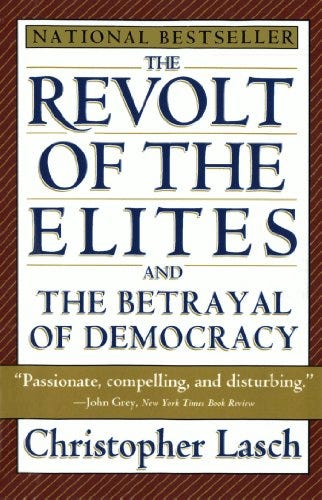
The Revolt of the Elites and the Betrayal of Democracy
A middle class, as Walter Russell Mead reminds us in his study of the declining American empire Mortal Splendor, “does not appear out of thin air.” Its power and numbers “depend on the overall wealth of the domestic economy,” and in countries, accordingly, where “wealth is concentrated in the hands of a tiny oligarchy and the rest of the population is desperately poor, the middle class can grow to only a limited extent. … [It] never escapes its primary role as a servant class to the oligarchy.”
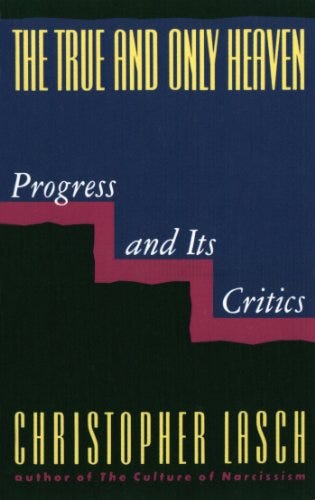
Hardly anyone asked any more whether freedom was consistent with hired labor. People groped instead, in effect, for a moral and social equivalent of the widespread property ownership once considered indispensable to the success of democracy. Attempts to achieve a redistribution of income, to equalize opportunity in various ways, to incorporate the working classes into a society of consumers, or to foster economic growth and overseas expansion as a substitute for social reform can all be considered as twentieth-century substitutes for property ownership; but none of these policies created the kind of active, enterprising citizenry envisioned by nineteenth-century democrats. Neither did the seemingly more daring solution adopted in the Soviet Union and eastern Europe, which claimed to abolish “wage slavery” but actually carried it on in a new and even more insidious form, substituting the state for the private employer and thereby depriving workers even of the right to strike.
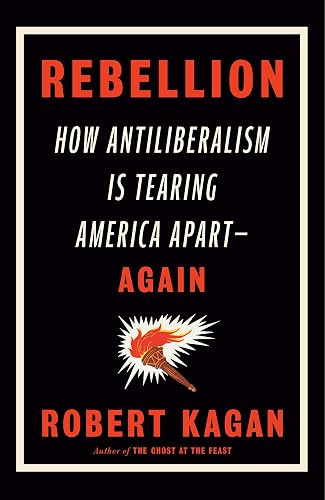
The general suspicion of strong government that shaped the contours of the new republic became entangled with the slaveholders’ demands to limit the federal government’s ability to intrude in their affairs. Henceforth, slaveholders and white supremacists of all stripes would appeal to this libertarian founding spirit, which paradoxically both protected American liberalism against a too-powerful government but also, perversely, offered protections for the antiliberal institution of slavery.
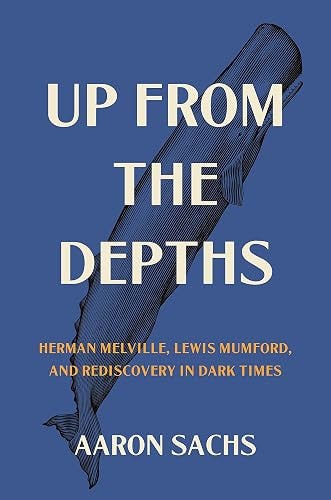
Melville was committed to the idea of America, and to American ideals—to freedom, justice, democracy, and Christian charity. But he found nothing more galling than the hypocrisy of Americans who refused to acknowledge that their nation had never lived up to those ideals.