Quotes: 12 July 2026
The good stuff

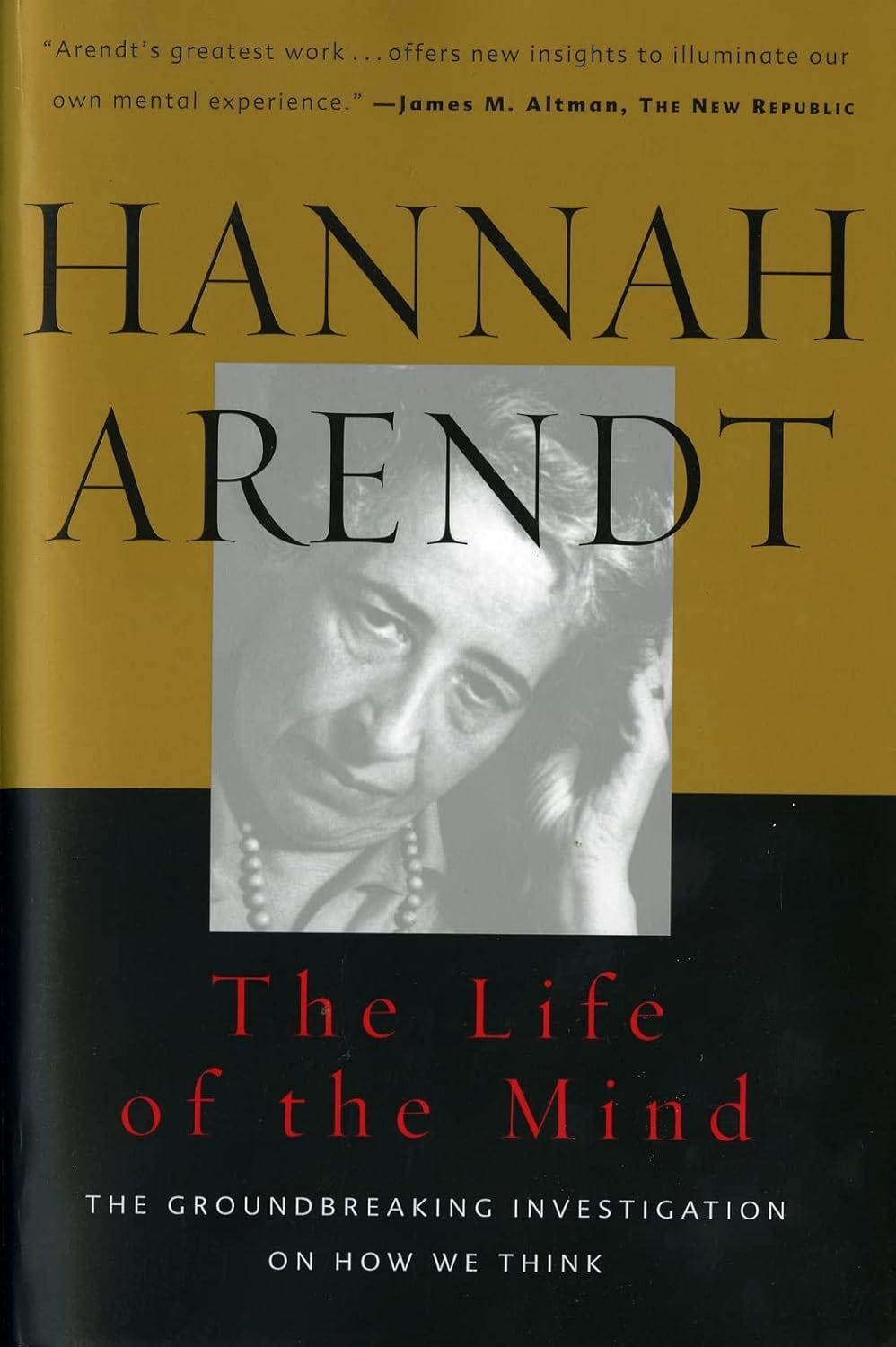
The great obstacle that reason (Vemunft) puts in its own way arises from the side of the intellect (Verstand) and the entirely justified criteria it has established for its own purposes, that is, for quenching our thirst, and meeting our need, for knowledge and cognition. The reason neither Kant nor his successors ever paid much attention to thinking as an activity and even less to the experiences of thinking ego is that, all distinctions notwithstanding, they were demanding the kind of results and applying the kind of criteria for certainty and evidence that are the results and the criteria of cognition. But if it is true that thinking and reason are justified in transcending the limitations of cognition and the intellect—justified by Kant on the ground that the matters they deal with, though unknowable, are of the greatest existential interest to man-then the assumption must be that thinking and reason are not concerned with what the intellect is concerned with. To anticipate, and put it in a nutshell: The need of reason is not inspired by the quest for truth but by the quest for meaning. And truth and meaning are not the same. [Italics in the original.] The basic fallacy, taking precedence over all specific metaphysical fallacies, is to interpret meaning on the model of truth.

The message here seems to be: Treat all things with equal seriousness and respect, and our own persons will be taken care of as a matter of course. The way to be rid of personal concerns is to be rid of the distinction between one’s person and the world in which we live.

Byzantine art was monotonously sensuous even as it was austere, and with an irresistible splendor that “dumbfounded,” revealing a civilization that encompassed at once stirring liturgies and fierce doctrinal debates over the nature of Christ and the possession of the True Cross.
Having lived in Romania for nearly two years, I can say that I share this sense of the power of Byzantine art and befuddlement at the level of violence, vituperation, and the arcane involved in their theological disputes.

A good story takes readers where they haven’t been before in the company of interesting people they learn to care about who are forced to deal with adversity.
Natality, not fatality. Better a womb than a tomb. Thinking of Socrates’s mother, we begin the philosophy of freedom not from an enclosing cave but from an opening world.
Shades of Arendt in this nod to natality.
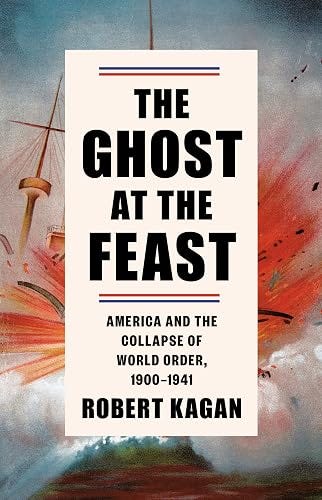
Thus began Hitler’s legitimation by elements of the German business and military establishment. At the outset of the crisis Hitler was a well-known figure chiefly in Bavaria, but the Ruhr occupation helped give him a national reputation and made him something of a cult figure. Nazi party membership more than doubled over the ten months of the French occupation, from 20,000 to 55,000.
And look how so many of America’s business elites—especially the tech bros—have pandered to Trump, aided with his projects (e.g., Musk and DOGE), and provided him with legitimacy. Shameful.
The fact that Americans were not “imperialists” did not make them virtuous. Americans’ lack of interest in empire did not mean they lacked greed or ambition. Although their liberal ideology suggested that ruling other peoples was immoral, they had managed to skirt around this problem at various times in their history when they deemed it necessary to acquire new lands inhabited by alien peoples. But by the end of the nineteenth century they simply had no need of overseas empire to fulfill either material or intangible needs.
And yet . . . the Philippines and other Pacific territories, Hawaii, Puerto Rico, etc.
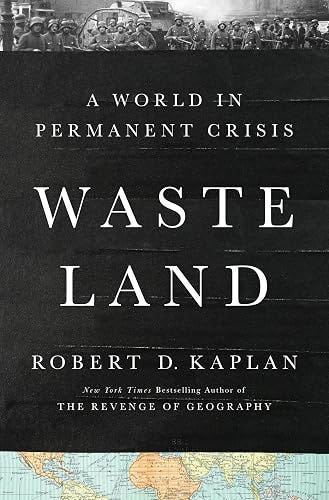
The soldiers and Marines from blue-collar families who fought in Iraq and Afghanistan—who I can attest as an embedded war reporter were originally enthusiastic about the prospects of victory—in significant measure turned to Trump following the abject failure of both wars, something which became undeniably apparent around the beginning of the century’s second decade. Yet the failure of the Iraq War was never truly central to Trump’s election: not nearly as central as was the outsourcing of well-paying manufacturing jobs to China and other developing countries, the further job-killing effects of automation, the anemic growth of the American economy in the years before Trump’s victory, or general cultural issues that occupied the media and obviously played a significant role.
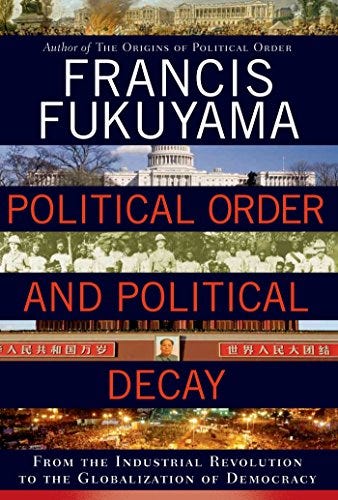
Political Order and Political Decay
[I]n Western Europe, law was the first of the three major institutions to emerge. China never developed a transcendental religion; perhaps for this reason, it never developed a true rule of law. There, the state emerged first, and up to the present day law has never existed as a fundamental constraint on political power. The sequence was reversed in Europe: law preceded the rise of the modern state. When European monarchs aspired to behave like Chinese emperors from the late sixteenth century on and create modern, centralized absolutist states, they had to do so against the backdrop of an existing legal order that limited their powers. The result was that few European monarchs ever acquired the concentrated powers of the Chinese state, despite aspirations to do so. Only in Russia, where the Eastern Church was always subordinated to the state, did such a regime emerge.
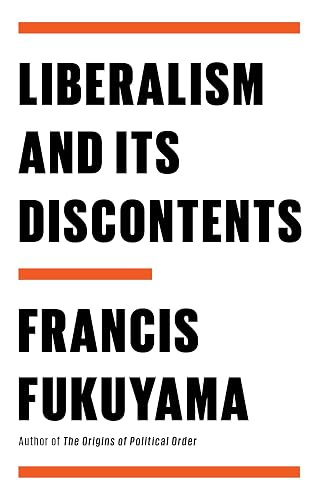
Liberalism and Its Discontents
While neoliberalism threatened liberal democracy by creating excessive inequality and financial instability, liberalism on the left evolved into modern identity politics, versions of which then began to undermine the premises of liberalism itself. The concept of autonomy was absolutized in ways that threatened social cohesion, and in its service progressive activists began to enlist social pressure and the power of the state to silence voices critical of their agenda.

[O]rganization into groups and sub-groups—families, totems, tribes, cities, nations, empires, churches, economic classes, clubs, parties—is an altogether universal feature of human life. The general laws or tendencies of organization, then, are part of the very conditions of social existence. There will be no escape from them no matter what alterations occur in economic or political structure; all attainable social goals, good or evil, will lie within the limits set by them. It is these general laws or tendencies of organization that [Robert] Michels sets out to discover, in particular those tendencies that bear upon the possibility of achieving democracy.